Case study: Durham Filtration


Optimizing Pulse-Jet Cleaning for Sustainable Energy: A CFD Approach to Emissions Control
Founded in 1977, Durham Filtration originally set out to service the oil and gas sector with compressed air and air filtration products.
Since those early days, the company – which is based in Jarrow, Tyne and Wear – has grown to serve sectors including food and beverage, pharmaceuticals, chemical processing and power generation.
It has partnered with the PINZ CDT on a project which seeks to advance pulse-jet cleaning systems for flue gas treatment emissions control in waste-to-energy and biomass combustion plants.
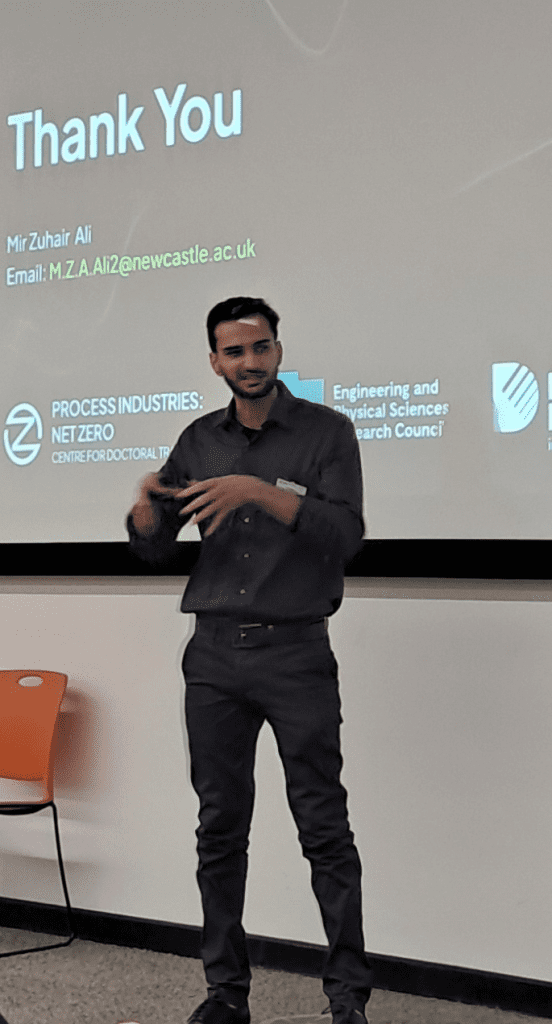
Based at Newcastle University, PhD researcher Mir Zuhair Ali is exploring how to move pulse-jet cleaning systems technology forward through using Computational Fluid Dynamics (CFD) methodologies for optimising filter cleaning processes. The end goal is enhancing filtration efficiency, reducing emissions, and improving the sustainability of energy production – aligning with both partners’ commitment to tackling climate change.
The results will feed directly into real-world applications by leveraging tools such as generative design, CAD/CAM and 3D printing.
Barry Goulden, Managing Director of Durham Filtration, explores his company’s partnership with the PINZ CDT – and the difference it is making.
How did your relationship with the PINZ CDT begin?
We undertook a knowledge transfer partnership with Newcastle University to look at how we could apply our existing filtration expertise to the biomass sector. That was highly successful, and the researcher who led that became our technical director, so we then decided that each year we would take a PhD student on, to bring more academic learning into the business.
Tell us more about the project…
Pulse jet bag filters are used to prevent ash, from the combustion of fuel, being emitted into the atmosphere. The filters are regenerative, with ash being deposited on the outside of the filter and periodically knocked off, for disposal, with pulses of compressed air. The project is looking at how this system can be designed in the most efficient way, with the optimal use of compressed air within the system.
How is Mir benefiting from working on a project through the PINZ CDT?
He’s working on real problems. For instance, he’s been able to work with one of our customers whose pulse jets have been performing poorly. That has entailed going on site visits, interacting with the customer, and being part of the wider discussion, so the project is helping him to integrate directly with industry.
Sometimes as an academic it can be difficult to understand the commercial world. But through the PINZ CDT, Mir is gaining an understanding of the commercial benefit of what he’s doing and the tangible benefits to the customer. He can see at first-hand how the pieces of the jigsaw fit together.
What particular capability, available through the PINZ CDT, is the project drawing on?
One of the most beneficial aspects is access to Newcastle University’s Rocket HPC (High Performance Computing) service. We can run the simulations we need to carry out on desktop computers, but that takes an enormous amount of time, which means you need to make compromises. Having access to the HPC systems means simulations can be run much more quickly and with a greater amount of detail. It reduces the turnaround times.
What has impressed you about working with Newcastle University’s Process Improvement Group on the project? Why should an SME with similar goals to Durham Filtration partner with the PINZ CDT?
The supervising doctors and professors see the world through very similar eyes to us in terms of the technology. It wasn’t a case of trying to get them on board – they contributed from day one.
If you’re an SME embarking on a project such as this, it can be a big step. If you pick the wrong institution to partner with, you may never do it again. But the team at Newcastle have been very proactive. And they really believe that everyone involved – the student, business and university – should benefit. They are very focused on collaboration within industry. For students aiming for careers in industry, programmes like the PINZ CDT offer excellent preparation and valuable professional experience.
Below: PINZ CDT PhD Researcher, Mir Zuhair Ali