
PINZ CDT has recently published its new Directory of Expertise, highlighting the extensive research strengths and capabilities across the Centre.
Bringing together two world-leading groups: Newcastle University’s Process Intensification Group and the University of York’s Green Chemistry Centre of Excellence (GCCE), PINZ CDT represents a powerful collaboration at the forefront of sustainable chemical innovation.
The Directory showcases the wide range of research undertaken by academics across both institutions. It also provides an overview of the specialist facilities and equipment available at Newcastle University of University of York, supporting collaborative research and industry engagement.

We are delighted to share that Louise Amor-Seabrooke, one of our Cohort 1 students, recently joined a panel discussion at Newcastle University to celebrate the International Day of Women and Girls in Science.
During the event, Louise spoke about the diverse career pathways women take in science, sharing insights from her own journey and experiences working in industry and as an early-career researcher.
Louise’s PhD is delivered in partnership with Biofuel Evolution and Centre for Process Innovation (CPI) and with academic supervision from Dr Sharon Velasquez Orta and Professor Adam Harvey. Her research explores the biological conversion of captured carbon dioxide and waste-derived feedstocks into renewable products, contributing to the development of more sustainable, circular approaches to resource use.

Are you a UK-based 3rd year MEng student interested in research and considering a future PhD? This summer you could gain hands-on research experience through the PINZ CDT Summer Vacation Studentships at Newcastle University.
We are offering six paid studentships, each lasting six weeks and starting on 15 June 2026.
What you will gain:
Paid experience working in chemical engineering research
The opportunity to contribute to a real research project linked to an industry partner
Valuable skills and insight into PhD study and academic research
The studentships are funded by the EPSRC Process Industries: Net Zero Centre for Doctoral Training (PINZ CDT), which aims to encourage students to pursue doctoral research careers in the process industries.
The centre is a collaboration between two world-leading research groups: the Process Intensification Group at Newcastle University and the Green Chemistry Centre of Excellence at University of York. Together, they will train 55 PhD students in annual cohorts through to 2028, helping develop the expertise needed to support the transition to net-zero process industries.
Interested?
Get in touch with us at pinz.cdt@newcastle.ac.uk by 17:00 on Friday 20 March.

On 21 and 22 January, the PINZ CDT Team from Newcastle University and University of York came together to hold our 2026 Conference. The event, held at Newcastle University’s Stephenson Building, was well attended, welcoming around 100 delegates from industry and academia.
Day One opened with technical overviews from PINZ CDT Co-Directors, Professor Adam Harvey and Professor Helen Sneddon. These talks showcased the work of the Newcastle University Process Intensification Group and of the University of York Green Chemistry Centre for Excellence. Following the technical overview presentations, there was an interactive session led by Dr Ryan Siddall, Innovation & Partnerships Manager. The session encouraged open discussion around net zero challenges and future plans within the process sector.
Day Two featured a keynote talk by Dr Mark Corbett, Director of the Biorenewables Development Centre, focussing on the BB-REG-NET project. This was followed by an industry perspective talk on the CarbonNation project, delivered by Joel Caragay, Senior Scientist at Procter & Gamble and Dr James Hendry, Researcher at Newcastle University.
Delegates also heard from EPSRC Portfolio Manager, Karen Davies, who provided valuable insight into the funder perspective.
Students from PINZ CDT Cohort 1 and Cohort 2 presented updates on their projects, sharing progress to date, early impacts and planned future work.
Thanks to everyone who attended the conference, delivered talks and contributed to discussions to make it an informative and vibrant event.
We were pleased to welcome Agilent, Asynt, Huber, Netzsch and Scientific Labs and as exhibitors on Day Two, helping to create a buzzing atmosphere in the foyer of the Stephenson Building throughout the day.

PINZ CDT staff and students visited the University of York’s Green Chemistry Centre of Excellence and the Biorenewables Development Centre (BDC) on 5 December.
The visit to the BDC included insightful presentations from Mark Gronnow and Debs Rathbone, who shared updates on recent projects, followed by a guided tour of the centre’s impressive facilities.
We are very grateful to Mark and Debs for hosting us at the BDC, and to Linda for organising such a valuable and enjoyable visit.

PINZ CDT staff and students attended the Institution of Chemical Engineers (IChemE) Tyneside Members Group Annual Awards Dinner on 23 October.
We were delighted to sponsor a table at this year’s event, which provided an excellent opportunity for networking and celebrating achievements in the chemical engineering community in the region.
We were especially proud to see our PINZ CDT Summer 2025 Placement Student, Anesh Tahir, receive the Engineering Student Outstanding Merit Award. Congratulations also to PINZ CDT Summer 2025 Placement Student, Charlotte Mellor, who was runner-up in this award.


Wednesday 21 January 2026, 12:30 – 15:30 and
Thursday 22 January 2026, 09:00 – 15:30
Newcastle University, Stephenson Building, NE1 7RU
Event summary
Join us at the second EPSRC Centre for Doctoral Training Process Industries: Net Zero (PINZ) 2026 Conference for an engaging day and a half of connection, discovery, and innovation. This event brings together researchers, industry leaders, and stakeholders to explore the latest progress in student-led research within the EPSRC PINZ Centre for Doctoral Training (CDT).
Expect insightful presentations, valuable networking opportunities, and fresh perspectives from across the process industries as we work towards a net zero future.
Day 1 will include a collaborative session uniting academics and industry to explore future industry challenges and co-develop project opportunities.
Day 2 will highlight the real-world research of Cohorts 1 and 2 as they address the net-zero challenges of their industrial partners, alongside direct insights from industry leaders on their current hurdles, offering valuable opportunities for networking and collaboration.
Day 1 Agenda
12:30 – 13:15 Registration and Lunch
13:15 – 13:30 Introduction: EPSRC Centre for Doctoral Training Process Industries: Net Zero
13:30 – 14:00 Technical overview: Newcastle University Process Intensification Group (PIG) and University of York Green Chemistry Centre for Excellence (GCCE)
14:00 – 15:30 Interactive session
This interactive session brings together industry professionals and academic experts to spark collaboration around shared challenges and innovation opportunities. In the session, academics will deliver concise elevator pitches showcasing their expertise, while facilitators help each group uncover barriers, explore potential solutions, and identify areas ripe for partnership. It’s a dynamic way for industry to tap into the specialist knowledge at Newcastle and York, and for academics to gain insight into real-world priorities.
16:00-17:30 Industrial Advisory Board Meeting
Day 2 Agenda
09:00 – 09:30 Registration and Refreshments
09:30 – 09:45 Welcome and Opening Remarks
09:45 – 10:15 Keynote Speaker
Further details to follow
10:15-10:30 Funder perspective
Karen Davies, EPSRC Portfolio Manager
10:30 – 10:45 Morning Break
10:45 – 12:15 PINZ CDT Cohort 2 Students: Flash presentations
12:15 – 13:15 Networking lunch and poster display
13:15 – 14:00 Industry perspective
Further details to follow
14:00 – 15:00 PINZ CDT Cohort 1 Students: Industry research project updates
15:00 – 15:15 Summer placements overview
15:15 – 15:30 Closing remarks
15:30 Close
If you have issues accessing the Registration form, please contact us at pinz.cdt@newcastle.ac.uk.
PINZ CDT students attend this year’s event at Newcastle University

On Friday 10 October, we were delighted to host the students from both Cohort 1 and Cohort 2 for our 2025 PINZ CDT Welcome Event at the School of Engineering, Newcastle University.
Over lunchtime, students joined a meeting of the Process Intensification Research Group (PIG), to hear presentations by Salome Usakuhyel Raymond and Ben Chapman, two Cohort 1 students from the University of York. Salome and Ben shared updates on their ongoing research projects in collaboration with industry partners, highlighting the real-world impact of their work.
Following the research session, students took part in the Welcome Event itself, offering an introduction to the CDT programme and an opportunity to connect with their peers and staff.
The day concluded with a relaxed early evening social – the perfect way to foster new connections and celebrate the collaborative spirit that defines our CDT community.

PINZ CDT Cohort 1 – Left to right: Louise Amor-Seabrooke, Salome Usakuhyel Raymond, Abubakar Kuburi, Vaishnavi Jambhorkar, Ben Chapman, Zuhair Ali, Abdul Samad

PINZ CDT Cohort 2 – Left to right: Aditya Tiwari, Kyle McLean, Max Atkinson, Alex Bradley, Kudzaishe Chiwara, Annabel Bowkett, Kypros Iakovou, Aarcha Kudzaishe Chiwara, Sam Bury, Robyn Haley, Amy Lumsdon, Dominic Gardiner
Cohort 1 students present to the Process Intensification Research Group

On Friday 10 October, had the pleasure of seeing two of our students, Salome Usakuhyel Raymond and Ben Chapman, present their ongoing research to the Process Intensification Group (PIG) at Newcastle University. Their work, developed with industry sponsors Thomas Swan & Co. Ltd. and Johnson Matthey, sparked insightful discussions.

Students share results of their placement projects
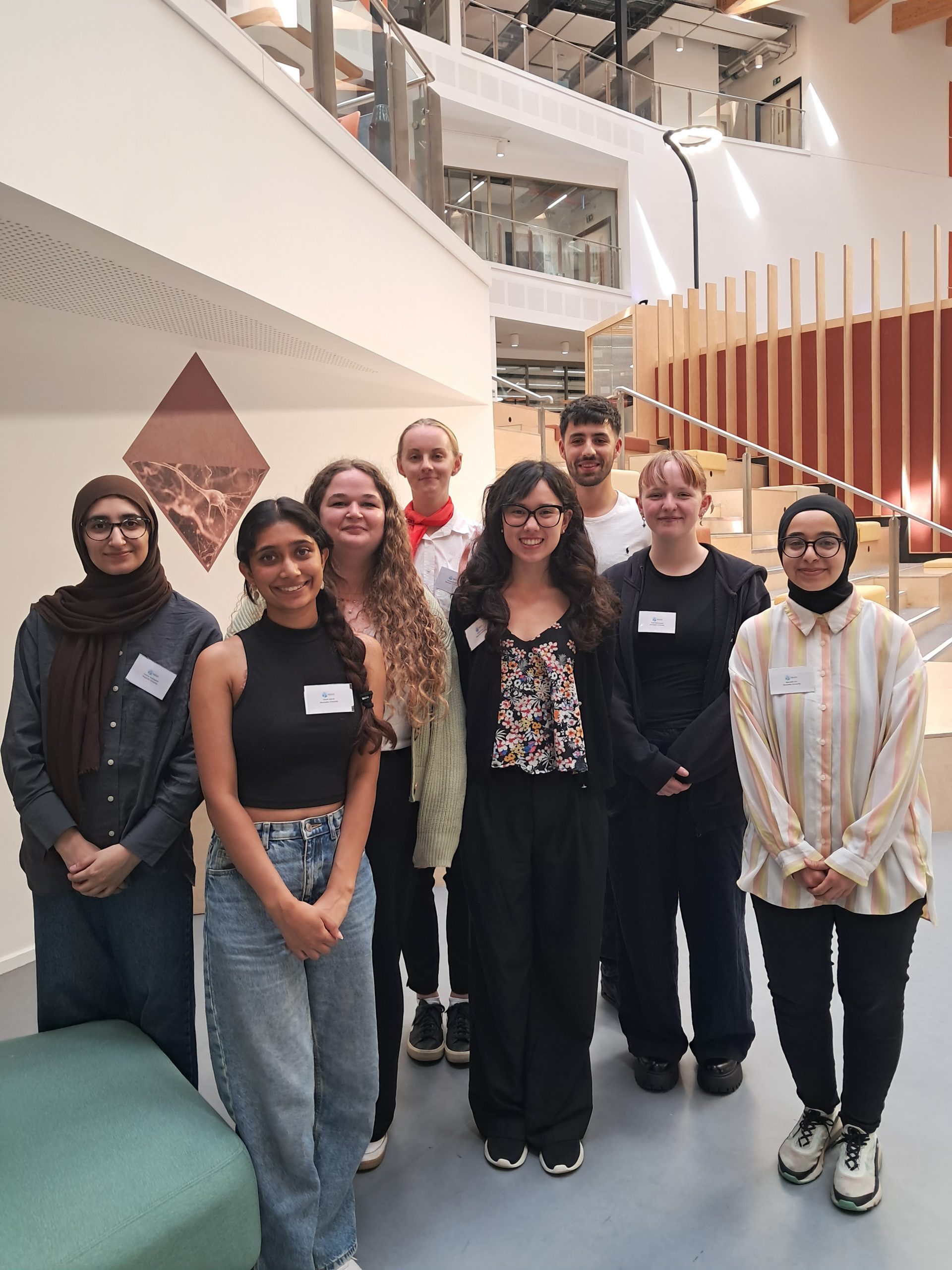
We were pleased to host presentations from our 2025 EPSRC Centre for Doctoral Training in Process Industries Net Zero (PINZ CDT) Vacation Placement Students at the Newcastle University Process Intensification Group meeting on Friday, 26 September.
Eight current Level 4 MEng students — Faizah Ashraf, Izzy Coles, Jessica Ensor, Basmalah Etri, Nyah Greenwood, Charlotte Mellor, Anahita Shahbakhsh, and Anesh Tahir — shared the results of their summer placements, undertaken in collaboration with industrial partners. Their projects addressed a diverse range of challenges, all contributing to the overarching goal of supporting the process industries in their transition to net zero.
Congratulations to the students for their excellent work!
Our thanks go to the industry sponsors who made these placements possible: Northumbrian Water Group Limited, Clean Carbon Solutions, METzero Technologies, Syngenta, Procter & Gamble, Merck Group, Johnson Matthey, AM Technology, and SSE Thermal.